

Here you can:
The all-in-one platform for speaker plans, custom builds, used gear, and sound system rentals across Europe. Join thousands of audio enthusiasts.
Everything You Need for Sound
From blueprints to finished builds, from buying gear to renting it — we've got you covered.
Archive
Browse a complete 3D archive of speaker plans with a powerful woofer search engine. Find schemes and T&S parameters instantly.
Woofer Database
Search by Thiele-Small parameters to find the perfect acoustic driver for your project. Compare specs across major manufacturers.
Builder
Connect artisan speaker builders with buyers across the globe. Whether you're a professional workshop or a passionate craftsman, join us.
Marketplace
Buy and sell used sound systems with confidence. A trusted marketplace built by and for the sound community.
Venue
Earn money renting out your sound system or find gear near you for your next event. Europe's growing platform for the sound system gig economy.
Speaker Plans
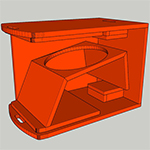
SB12
12"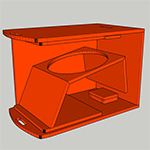
Beyma design15p80nd_subbass
15"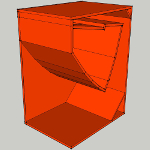
ciare_15_punisher
15"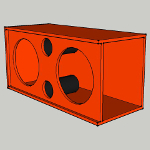
ciare_br025
15"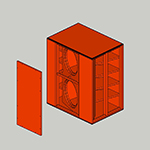
hb1502b1
15"
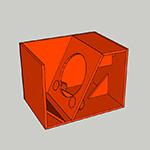
HBR15
15"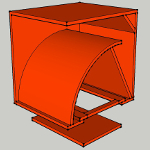
hd15
15"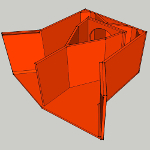
martin_audio_c115
15"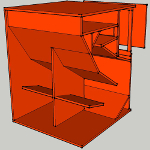
martin_audio_s2
15"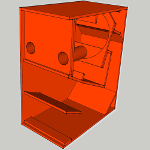
martin_audio_wlx
15"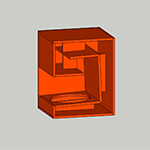
Tham15
15"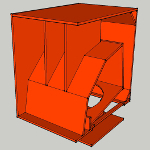
18sound_18horn
18"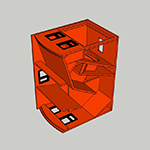
ag_ts118h
18"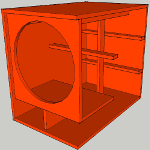
bc_sub18don
18"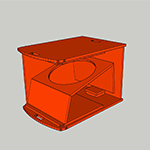
Beyma SB18
18"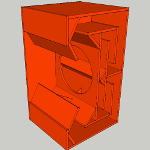
cb18
18"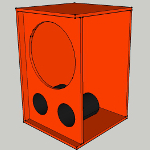
celestion_c18VJD
18"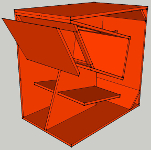
cerwinvega_sl36
18"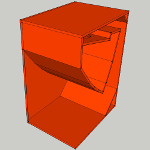
ciare_18_punisher
18"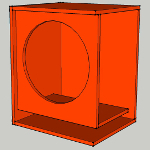
ciare_br030
18"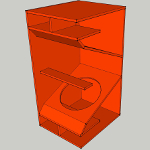
cw218
18"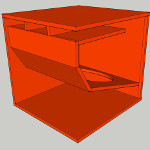
db_c4
18"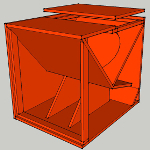
es18pbh
18"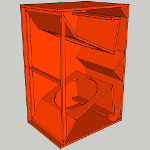
ev_mtl1
18"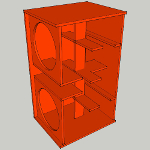
gsub
18"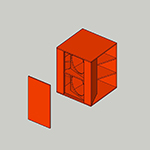
HB1805C1
18"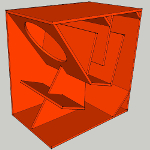
hog_scoop
18"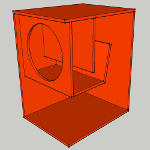
marc-o_MS46
18"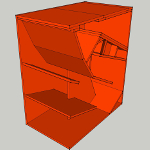
martin_audio_wsx
18"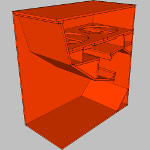
meatgrinder_v3
18"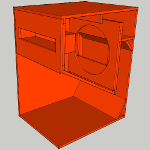
mhb46
18"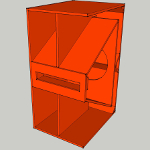
mhb4818
18"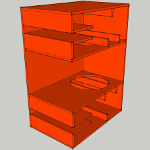
mn246
18"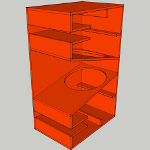
mtb246
18"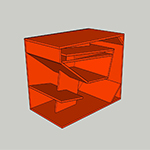
Punisher Horn MKII
18"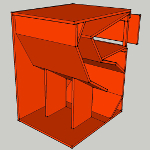
s1850
18"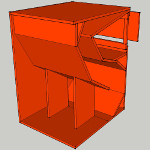
s186
18"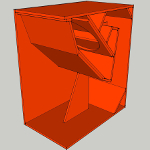
sgubin
18"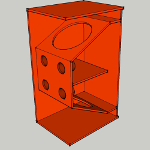
sos_218sub
18"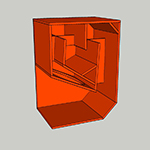
TH18 Xoc1
18"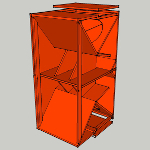
Usb_bin
18"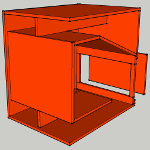
x1_sub
18"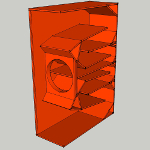
audon_exp_scoop21
21"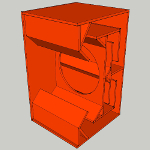
cb21don
21"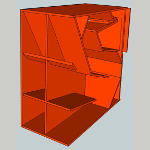
flh121
21"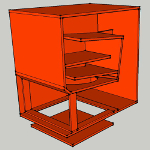
othorn
21"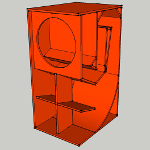
super_scooper_mogale_21
21"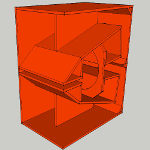
w-bin21Don
21"
tsw124
24"
wbin_24_don
24"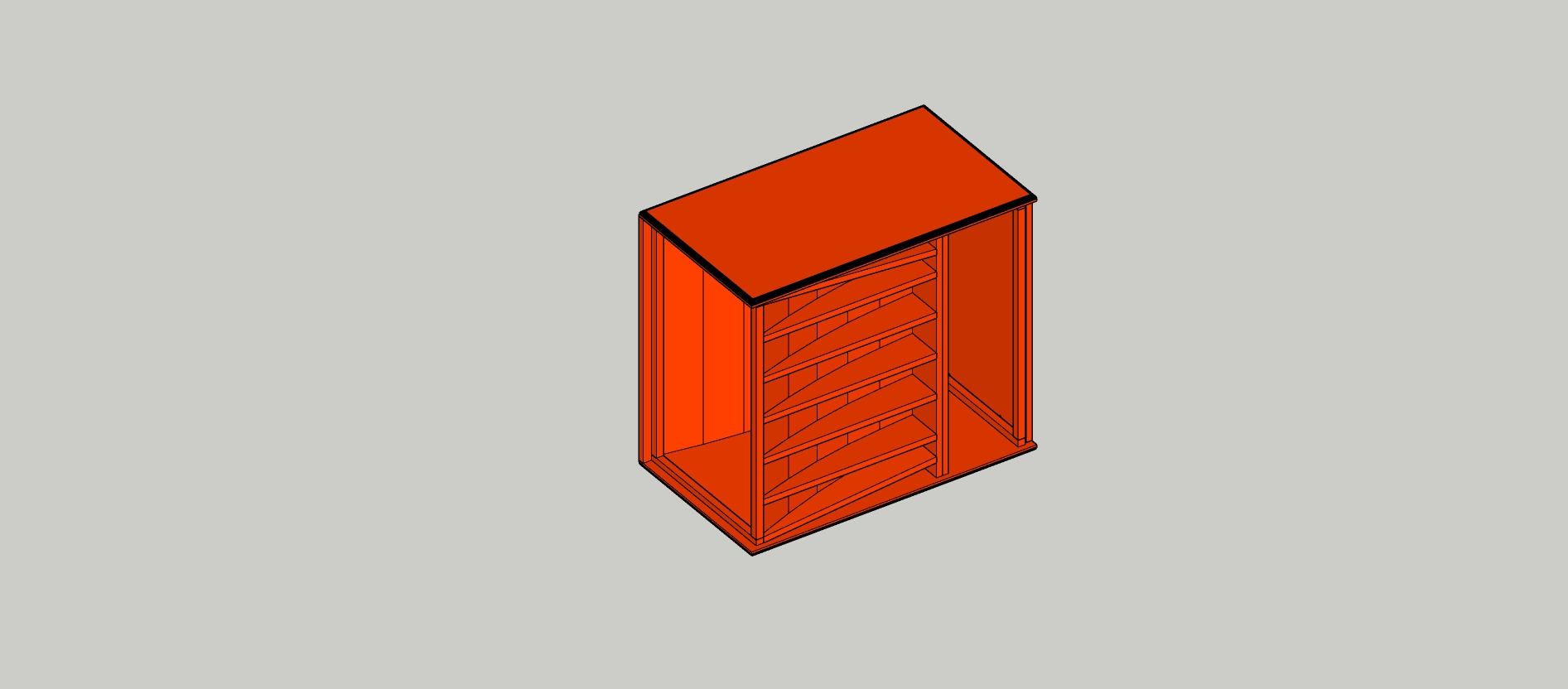
HB1205
Top
HB1505C1
Top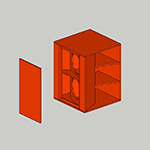
hb1505d1
Top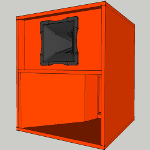
mt130
Top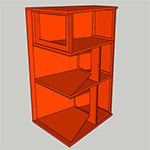
pas1ma1
Top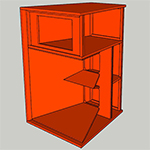
pas3ma1
Top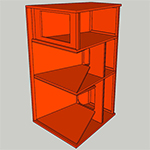
pas3ma3
Top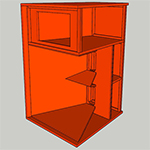
pas3ma4
Top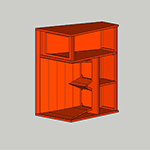
pas4ma1
Top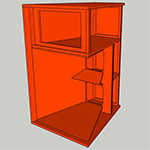
pas5ma1
Top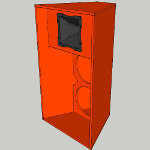
smt212
Top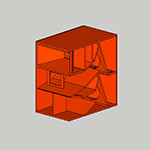
X-Tro
TopPlan's Guide
Step-by-step guide to building and installing your speaker enclosure.
Download the Plan
Choose a speaker plan from the Speaker Plans section. Premium members can download the full CNC files.
Prepare Materials
Use 18mm or 21mm birch plywood for best results. Cut panels according to the dimension sheet. Sand all edges before assembly.
Assemble the Cabinet
Glue and screw panels together following the assembly drawing. Ensure all joints are airtight. Use wood glue and 40–50mm screws at 150mm intervals.
Wire & Fit the Driver
Route the speaker cable through the port or a dedicated hole before mounting the driver. Connect wiring, apply gasket foam, and secure the woofer with the correct bolts.
Test & Tune
Apply a test signal at low volume. Check for rattles, air leaks, and correct polarity. Use a measurement tool (REW, DATS) to verify the response matches the simulation.
Finish & Mount
Sand the exterior smooth and apply your preferred finish — carpet, Tolex, or paint. Mount handles, corners, and feet as needed before final installation.
General Information
A practical reference on electroacoustics, speaker design, and room acoustics.
Sound & Frequency
Sound is a longitudinal pressure wave that travels through elastic media—air, water, or solids—at a speed determined by temperature and density (approximately 343 m/s in air at 20 °C). Frequency, measured in Hertz (Hz), defines the perceived pitch. Human hearing spans roughly 20 Hz to 20 kHz, though sensitivity peaks between 2–5 kHz (the Fletcher–Munson equal-loudness contours illustrate this). Wavelength λ = c / f: a 50 Hz tone has a wavelength of about 6.86 m, while 10 kHz measures just 3.4 cm. This relationship is critical for enclosure and horn dimensioning, port tuning, and acoustic treatment sizing.
Wavelength, Phase & Interference
When two sound sources emit at similar frequencies, their waves can reinforce (constructive interference) or cancel (destructive interference) depending on their phase relationship. A 180° phase offset produces complete cancellation at that frequency. In multi-driver speaker systems, physical spacing introduces path-length differences: the crossover frequency must be chosen so that the wavelength is long relative to driver separation, minimising lobing and comb-filtering. Time-aligning drivers—either by physical offset or digital delay—ensures coherent summation at the listening position.
Thiele–Small Parameters
T&S parameters are a set of electromechanical measurements that characterise a loudspeaker driver’s behaviour in the small-signal (linear) domain. Fs (resonant frequency): the lowest frequency at which the cone moves most freely. Qms (mechanical Q): ratio of stored to dissipated energy in the suspension. Qes (electrical Q): damping provided by the voice coil’s interaction with the magnet. Qts = (Qms × Qes)/(Qms + Qes), the total Q, governs alignment choice: Qts < 0.4 suits sealed or ported, 0.4–0.7 works in vented, > 0.7 favours sealed. Vas: the air volume whose compliance equals the driver’s suspension compliance. Xmax: peak linear excursion (one-way) before distortion rises sharply. BL (force factor): product of magnetic flux density and coil length—higher BL means tighter motor control. Sd: effective radiating area characterises the displacement volume at a given Xmax. EBP = Fs/Qes, a quick indicator: > 100 favours vented; < 50 favours sealed.
Enclosure Types
Sealed (acoustic suspension): the simplest design—a closed box raises the system resonance (Fc) and provides a gentle −12 dB/oct rolloff. The trapped air acts as a spring, trading efficiency for transient accuracy and a predictable, smooth low-frequency response. Ported (bass reflex): a tuned vent (port) resonates at the box tuning frequency (Fb), extending output by inverting phase at resonance—the port contributes bass energy rather than the cone. Below Fb, the rolloff steepens to −24 dB/oct and cone excursion rises rapidly (unloading), so a high-pass filter is often required. Bandpass (4th & 6th order): one or both sides of the driver load into tuned chambers, concentrating output over a narrow frequency band with high efficiency. Common in dedicated subwoofer applications. Transmission Line (TL): uses a long, damped internal pathway (typically ¼-wavelength at Fs) to absorb rear radiation progressively—deep, natural bass with minimal group delay. Isobaric: two drivers in clamshell or face-to-face configuration halve the required box volume by presenting doubled compliance to the air load.
Horn Loading & Waveguides
Horns act as acoustic transformers: the throat (small area, high pressure) couples to the mouth (large area, low pressure), improving radiation efficiency by 6–10 dB over direct radiation. The flare profile determines behaviour: exponential horns maintain constant directivity but need a large mouth for low-frequency cutoff; conical are simpler to build but less controlled; hyperbolic offer a compromise between size and cutoff. Folded horns (W-bin, Tham, scoop, THAM-style) pack a long path into a compact cabinet by reflecting the wavefront multiple times. The mouth area must exceed π / 4 × λ² at the lowest operating frequency, otherwise efficiency drops. Horn-loaded compression drivers on high-frequency waveguides allow precise pattern control (60°×40°, 90°×60°, etc.) for even venue coverage and reduced ceiling/wall reflections.
SPL, Power & Sensitivity
Sensitivity is rated as dB SPL at 1 W input measured at 1 m on-axis (dB/1W/1m). For every doubling of amplifier power, SPL increases by 3 dB. Doubling the number of identical sources adds another 3 dB (mutual coupling) at frequencies where drivers are less than half a wavelength apart. Halving the listening distance increases SPL by 6 dB (inverse-square law in free field). Practical formula: SPL = Sensitivity + 10 × log₁₀(Power) − 20 × log₁₀(distance). A typical pro 18″ woofer rated 100 dB/1W/1m driven with 1000 W produces 130 dB at 1 m peak. Thermal power handling (AES) differs from mechanical power handling (Xmax-limited)—the real-world limit is usually the lower of the two.
Crossovers & Frequency Division
Crossover networks split the audio signal into frequency bands routed to dedicated drivers. Passive crossovers use inductors, capacitors, and resistors after the amplifier—lossy, heavy, and hard to adjust but simple and reliable. Active crossovers (analogue or DSP) split the signal before amplification, allowing each driver to have its own amplifier channel with independent level, delay, EQ, and limiting. Filter slopes: 1st-order (−6 dB/oct, Butterworth), 2nd-order (−12 dB/oct), 3rd-order (−18 dB/oct), and 4th-order Linkwitz–Riley (−24 dB/oct, sum-flat at crossover). LR4 is the standard in professional systems because both outputs are −6 dB at the crossover frequency, summing to 0 dB with zero phase offset. Crossover points should be chosen where both the low-pass and high-pass drivers can comfortably reproduce the signal—typically 1–2 octaves from each driver’s limits.
Room Acoustics & Treatment
Every enclosed space has resonant modes determined by its dimensions. Axial modes (between two parallel surfaces) are the strongest; tangential and oblique modes are weaker but numerous. The Schroeder frequency marks the transition between discrete modal behaviour and statistical diffuse-field behaviour (typically 80–300 Hz in small rooms, higher in large venues). RT60 (reverberation time) measures how long sound takes to decay by 60 dB—ideal values depend on use: 0.2–0.4 s for a recording studio control room, 0.4–0.8 s for a nightclub, 1.2–2.0 s for a concert hall. Bass traps (porous or resonant) placed in corners absorb low frequencies. Broadband absorbers (mineral wool or foam panels) reduce mid/high reflections. Diffusers (QRD, skyline, poly-cylindrical) scatter energy to maintain liveliness without flutter echoes. Early reflections within 20 ms of the direct sound should be managed at the first reflection points.
DSP & System Optimisation
Modern loudspeaker management relies on Digital Signal Processing to apply FIR/IIR filters for crossover, equalisation, and phase correction in real time. Key functions: alignment delay—time-aligns drivers and stacked cabinets so their wavefronts arrive simultaneously at the listener; parametric EQ—surgical notch or boost at specific frequencies (Q, gain, centre frequency) to correct driver anomalies or room modes; limiter/compressor—protects drivers from thermal and mechanical damage by clamping peak and RMS levels; FIR linearisation—corrects the phase response without altering magnitude, yielding a perfectly linear-phase system at the cost of latency. Measurement tools like REW, SMAART, or Systune paired with a calibrated measurement microphone are essential for verifying transfer functions, coherence, and impulse response in situ.
Amplifier Classes & Wiring
Class AB: the traditional topology—low distortion, moderate efficiency (50–65%), heavy and heat-intensive. Still used in high-end hi-fi. Class D: pulse-width modulation switching at >300 kHz achieves >90% efficiency, drastically reducing size and weight. Dominates pro audio touring and installation. Class H: a Class AB variant with rail-tracking power supply that steps voltage up only during peaks, improving efficiency to ~70%. Impedance wiring: two 8 Ω drivers in parallel yield 4 Ω; in series, 16 Ω. Most pro amplifiers deliver rated power at 4 Ω and double it at 2 Ω (if stable). Damping factor (amplifier output impedance vs. load impedance) affects driver control—higher is tighter. Cable resistance: use ≥2.5 mm² for runs up to 10 m, ≥4 mm² beyond that, to keep resistive losses below 0.5 dB.
Driver Construction & Motor Topology
A loudspeaker driver converts electrical energy to mechanical motion via the Lorentz force (current × magnetic field × coil length). Ferrite magnets are cost-effective and common in high-power pro woofers; neodymium (NdFeB) magnets are 8–10× stronger by weight, enabling lighter designs ideal for line arrays and portable systems. Voice coil diameter (2″, 3″, 4″) determines heat dissipation and power handling—larger coils spread heat over more surface area. Cone materials range from paper (light, well-damped) to Kevlar (stiff, controlled breakup), carbon fibre (ultra-rigid, low mass), and aluminium (high velocity of sound, but prone to ringing without proper treatment). Surround types: cloth roll provides long Xmax and durability; rubber offers tighter control; foam is lightweight but degrades over time. The spider (rear suspension) centres the coil and provides the restoring force.
Line Arrays & Coverage Patterns
A line array is a vertical arrangement of identical, closely spaced sources that creates a cylindrical wavefront. Unlike a point source (which loses 6 dB per doubling of distance), an ideal line source loses only 3 dB—meaning the sound carries further with more even front-to-back coverage in the venue. Each element covers a narrow vertical angle (5–15°); inter-element splay angles determine the total vertical coverage and can be adjusted to focus energy on the audience rather than walls or ceiling. J-arrays combine a straight section (for throw) with a curved lower section (for near-field coverage). Horizontal coverage is fixed by the waveguide (60°–120°). Array modelling software (EASE, MAPP, ArrayCalc) predicts SPL distribution and helps position the hang point, trim height, and splay angles before load-in.
Cabinet Design & Materials
Birch plywood (18–21 mm, void-free Baltic birch) is the gold standard for pro speaker enclosures: high stiffness-to-weight ratio, consistent density, and excellent screw-holding. MDF is cheaper and homogeneous but heavier and weaker at edges. Internal bracing (window braces, shelf braces, cross-struts) stiffens panels and shifts resonances upward, reducing coloration. All joints should be airtight—use wood glue (PVA or polyurethane) combined with screws or staples at 100–150 mm spacing. Ports are tuned using the formula: Lv = (23562.5 × Dv² × Np) / (Fb² × Vb) − 0.732 × Dv, where Dv is port diameter, Np the number of ports, Fb the tuning frequency, and Vb the net box volume. Port air velocity should stay below 25 m/s to avoid turbulence and chuffing noise.
Psychoacoustics & Perception
Human hearing is not linear: we are most sensitive between 2–5 kHz (the ear canal resonance amplifies this region by ~10 dB) and least sensitive at very low and very high frequencies. The Haas effect (precedence effect) means that the first-arriving sound determines perceived direction, even if a delayed reflection is up to 10 dB louder—this is exploited in delay tower placement at live events. Masking: a louder sound can render a nearby softer sound inaudible, important for subwoofer/top balance. Localisation: above ~700 Hz, the ear uses interaural level differences (ILD); below, interaural time differences (ITD). Bass frequencies (<80 Hz) are essentially non-directional, which is why a single subwoofer cluster can serve the whole venue without stereo imaging loss.
Power Distribution & Safety
Professional sound systems demand clean, adequate electrical supply. A typical touring rig may draw 60–120 A at 230 V (single phase) or use three-phase (400 V) for larger systems. Cable sizing: follow local electrical codes (IEC, NEC) and allow for voltage drop over long runs. RCD/GFCI protection is mandatory for personnel safety. Distro boards split the incoming supply into individually fused circuits for amps, processing, and backline. Grounding: maintain a star-ground topology to avoid ground loops that cause hum (50/60 Hz and harmonics). Use balanced (XLR) signal cables and isolate grounds between audio and lighting systems. Always carry a power conditioner or isolation transformer to protect sensitive DSP and digital equipment from mains spikes.
Measurement & Calibration
Objective measurement is the foundation of a professionally tuned system. Transfer function analysis compares the input signal to the microphone capture, revealing magnitude and phase response at every frequency. Coherence indicates how much of the measured signal is caused by the system vs. ambient noise—below 0.8 coherence, the data is unreliable. Impulse response measurements reveal reflections, arrival times, and RT60. Common tools: REW (free, excellent for room analysis), SMAART (industry-standard live measurement), Systune (dual-channel real-time). Use a calibrated omnidirectional measurement microphone (e.g., UMIK-1, Earthworks M30). Measure at multiple positions across the audience area and average results for system EQ decisions—never optimise for a single seat.
Acoustic's Books
A practical reference on electroacoustics, speaker design, and room acoustics.
Recommended Books
Mission
Scope
Working on nothing for something
Our mission:
Build an ecosystem for sound systems without spam or annoying popups,
as we just want to appreciate good music.
As SP.EU has done in the last 10 years.
About Us
From 2015, with love for audio and music.
Useful Links
Community & Resources
- forum.speakerplans.com
- loudspeakerdatabase.com
- speakerboxlite.com
- freespeakerplans.com
- soundform webapp. the best for calcs
Useful Software
- BassPc — for reflex calculation
- HornResp — for horn calculation
- EASE Focus 3
- VituixCAD
- WinSpeakerz